Another central bank official or vice president of the four major banks! Wang Jingwu, Director of the Financial Stability Board, will fill the position of ICBC.
=
Wang Jingwu, the current director of the Financial Stability Bureau of the Central Bank, may become the vice president of ICBC, which is another central bank official to become the vice president of the four major banks after Ji Zhihong, the former director of the Financial Markets Department of the Central Bank, went to be the vice president of CCB.
Want to join the monarch
China Industrial and Commercial Bank (hereinafter referred to as ICBC), which has only one vice president, is about to welcome a new vice president!
On March 7, according to relevant media reports, Wang Jingwu, the current director of the Financial Stability Bureau of the Central Bank, is expected to be the vice president of ICBC, and was inspected at the end of February. At 9: 30 am on March 6, 2020, ICBC held a meeting of middle-level and above cadres and announced the news. Recently, Wang Jingwu still needs to handle the relevant work of the central bank before taking office.
This personnel adjustment is another central bank official who became the vice president of the four major banks after Ji Zhihong, the former director of the financial market department of the central bank, went to be the vice president of CCB. On the one hand, Wang Jingwu, who has nearly 35 years of supervision experience, will partially alleviate the shortage of vice presidents of ICBC, on the other hand, his years of supervision experience will also become an effective boost for the steady progress of the "Cosmic Tour".
On February 18th this year, ICBC set up the post of Senior Business Director, and at the same time hired two "ICBC veterans"-Xiong Yan, general manager of institutional financial business department, and Song Jianhua, general manager of personal financial business department, to serve as Senior Business Directors, who are in charge of business line management and decision-making, and report to the President. It is conceivable that ICBC set up the post of senior business director to relieve the pressure of the shortage of vice presidents.
Since 2019, many senior executives of ICBC have changed. Yi Huiman, the former chairman, took over as the chairman of the CSRC and welcomed Chen Siqing, the new chairman. Later, Tan Jiong and Hu Hao, two vice presidents, also bid farewell to ICBC. In February 2020, Hu Hao, vice president of ICBC for 36 years, resigned and became the supervisor of China Investment Co., Ltd.; In September 2019, Tan Jiong submitted his resignation to the Board of Directors of ICBC, and soon became the new deputy governor of Guizhou Province. Compared with the senior management of other big banks, the senior management of ICBC is the most inadequate.
01
Wang Jingwu, the central bank, will fill the position of vice president of ICBC.
Cosmic bank ICBC’s management strength has been enriched again. On March 7th, the reporter confirmed from a person close to Wang Jingwu, director of the Financial Stability Bureau of the Central Bank, that Wang Jingwu would be the vice president of ICBC. This is the latest example of the central bank’s bureau-level leaders filling the position of senior executives of the four major banks.
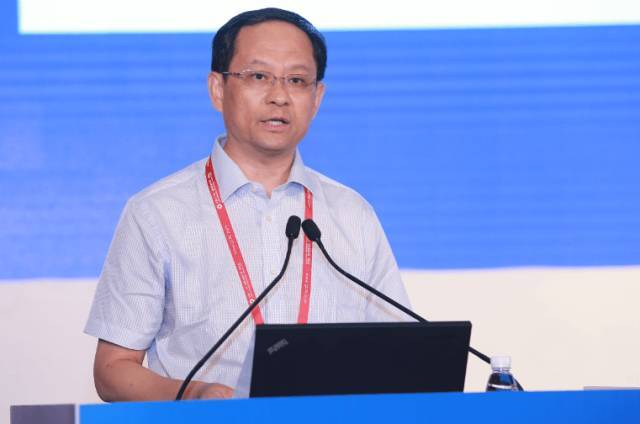
According to public information, Wang Jingwu was born in April, 1966, a native of Guangzong County, Hebei Province, with a doctorate in economics and a researcher. He joined the work in 1985 and has nearly 35 years of supervision experience. Since December 2018, he has served as the director of the Financial Stability Bureau of the People’s Bank of China.
The financial stability bureau of the central bank is mainly responsible for comprehensively analyzing and evaluating systemic financial risks and putting forward policy suggestions to prevent and resolve systemic financial risks; Evaluate the impact of major financial mergers and acquisitions on national financial security and put forward policy suggestions. Wang Jingwu is one of the chief compilations of China Financial Stability Report (2019).
Prior to assuming the post of Director of the Financial Stability Board, Wang Jingwu served as Party Secretary and President of Shijiazhuang Central Branch of the People’s Bank of China, Director of Hebei Branch of the State Administration of Foreign Exchange, Secretary and President of Hohhot Central Branch, Director of Inner Mongolia Branch of the State Administration of Foreign Exchange, Secretary and President of Guangzhou Branch, Director of Guangdong Branch of the State Administration of Foreign Exchange, He used to be a representative of the 11th People’s Congress of Hebei Province, a member of the Financial and Economic Committee of the 11th People’s Congress of Hebei Province, a vice-chairman of the 9th and 10th committees of Hebei Youth Federation, a member of the 9th Committee of Inner Mongolia Autonomous Region, and a vice-chairman of the 11th Committee of Inner Mongolia Youth Federation. In 2015, he was hired as an expert member of the decision-making advisory Committee of the Guangdong Provincial Government (2015-2018).
During his tenure as director of the Financial Stability Board, Wang Jingwu said that to fight against and resolve major financial risks, it is necessary to strengthen policy coordination and better support the development of the real economy. Effectively dredge the transmission mechanism of monetary policy, get through the "last mile" of financial resources allocation to the real economy, and promote the formation of a virtuous circle of economy and finance. Optimize the policy system, further improve and deepen the financial services of the real economy such as private enterprises and small and micro enterprises, and alleviate the problem of difficult and expensive financing.
A few days ago, Wang Jingwu wrote in the second issue of China Finance in 2020 that the central bank and the regulatory authorities have steadily and orderly promoted the risk disposal of some key institutions with exposed risks and systematic influence. In the future, we will continue to deal with the risks of key institutions in an orderly manner and focus on resolving the risks of local small and medium-sized financial institutions; We will continue to carry out special rectification of Internet financial risks such as peer-to-peer lending, severely crack down on illegal financial activities such as illegal fund-raising and vigorously rectify the financial order.
02
The "one positive and one deputy" architecture has frequent changes in executives.
Since July 2018, ICBC executives have changed frequently. On January 26th, 2019, Yi Huiman, the former chairman of ICBC, took over from Liu Shiyu as the chairman of the CSRC, which opened the prelude to the senior management change of Cosmic Bank. In April last year, Chen Siqing, the former chairman of China Bank, officially became the chairman of ICBC and became the new head of ICBC.
At the end of November, the Party Committee of ICBC announced that Yang Guozhong, Deputy Secretary of the Party Committee and Chairman of the Board of Supervisors of CIC, was appointed as the Deputy Secretary of the Party Committee of the Bank. In January this year, ICBC announced that Yang Guozhong’s appointment as the bank’s supervisor took effect. At this point, ICBC’s "three long" are complete. Namely, Chairman Chen Siqing, President Gu Shu and Chairman Yang Guozhong.
At the vice-president level, ICBC is facing a serious shortage. Since July 2018, five vice-presidents of ICBC have left one after another, and three vice-presidents have left in February 2018 alone.
Specifically, on the afternoon of July 2, 2018, ICBC announced that Mr. Zhang Hongli, the executive director and vice president of the bank, submitted his resignation to the board of directors of the bank on July 2, 2018 for family reasons and resigned as the vice president of the bank; On the evening of September 5, the same year, ICBC issued an announcement. Wang Jingdong, the executive director and vice president, submitted his resignation to the board of directors of the bank on September 5, 2018 due to job changes. Only one day later, ICBC issued an announcement on September 6, and Li Yunze, the vice president, resigned.
Except for Zhang Hongli’s resignation due to family reasons, the other two were promoted and reused. In September 2018, Wang Jingdong was appointed as the supervisor of the Agricultural Bank of China; Li Yunze went to Sichuan Province as the vice governor of the province.
On September 16, 2019, Tan Jiong, another vice president of ICBC, submitted his resignation to the board of directors of the bank, and soon became the new vice governor of Guizhou Province. As a result, the senior management structure of ICBC became a "one positive and one deputy" structure, with President Gu Shu and the only vice president Hu Hao. Later, with the arrival of Liao Lin, this situation was alleviated.
On the afternoon of November 22, 2019, CCB announced that Liao Lin had resigned as the vice president of CCB due to job transfer. Immediately afterwards, ICBC announced that the Board of Directors reviewed and approved the Proposal on Appointing Mr. Liao Lin as the Vice President of China Industrial and Commercial Bank Co., Ltd..
But not long after, in February, 2020, Hu Hao, the vice president of ICBC for 36 years, resigned and became the chairman of the board of supervisors of China Investment Co., Ltd., and ICBC was once again caught in an embarrassing situation with only one vice president.
"Speaking of it, it’s embarrassing. Although you are the largest bank in the universe, ICBC’s senior management team is the most lacking. In recent years, in the process of dealing with local governments and central enterprises, the other party often complains that we don’t attach importance to cooperation with them, and even the competent president is absent." A middle-level ICBC official said with a smile that they didn’t know the difficulties of ICBC. Most of the time, the department bosses of the bank are used as vice presidents, and the secretary of the board of directors is in charge of more than 10 departments. It is conceivable that the senior executives of the bank have heavy tasks and great pressure.
Up to now, the leading bodies of ICBC are: Chairman Chen Siqing, President Gu Shu, Chairman Yang Guozhong, Vice President Liao Lin, Chief Risk Officer Wang Bairong and Secretary of the Board of Directors Guan Xueqing. Among them, Liao Lin has been the vice president of ICBC for less than half a year, and he was previously the vice president of China Construction Bank. Compared with the senior management of other big banks, the senior management of ICBC is the most inadequate.
03
Two "ICBC veterans" served as senior business directors.
At present, ICBC has only one vice president, which is the largest state-owned bank lacking vice presidents at present, which is far from the standard configuration of "one positive and five vice presidents". Wang Jingwu’s arrival may alleviate this situation.
On the evening of February 18th, ICBC announced that in order to further enrich the bank’s management strength and promote the sustained and steady development of its business, the board of directors decided to set up a senior business director among the bank’s senior managers. Senior business director participates in the division of work of senior managers, is responsible for the management and decision-making of business lines, and reports to the president.
Of course, ICBC is not only as simple as setting up a new position, but also announced that it has hired two "ICBC veterans" to take the position of senior director, namely, Xiong Yan, general manager of institutional financial business department, and Song Jianhua, general manager of personal financial business department. Both of them have worked in ICBC for more than 30 years and are "old ICBC people".
It is understood that the newly-established senior business director’s responsibilities have also expanded. For example, Song Jianhua is still the general manager of the personal finance business department and will also be in charge of the card department.
According to public information, Xiong Yan was born in August 1964, graduated from Hunan University, and later obtained IMBA degrees from Fudan University and Hong Kong University as a senior economist. She joined ICBC in July 1984, and has worked in ICBC for 35 years. Since November 2004, she has served as deputy director of Kunming Branch of Internal Audit Bureau, vice president of Yunnan Branch and deputy director of the branch directly under the Internal Audit Bureau. In August 2010, she served as deputy general manager of Corporate Business Department I (Corporate Finance Department) of the Head Office, and in September 2016, she served as general manager of Institutional Finance Department of the Head Office.
In 2018, Xiong Yan published a signed article "Exploration of Local Debt Business of Commercial Banks" in China Economist Magazine. She pointed out in the article that "under the new market situation, commercial banks, as the largest investors in the local debt market, should be based on the overall situation of national reform and development and be firm implementers of policies to prevent financial risks; On the other hand, it is necessary to seize the development opportunities brought by the emerging markets of local bonds, and at the same time gain investment income, be a practitioner of banking business in the new period of transformation and upgrading. “
Song Jianhua was born in October 1965, graduated from Peking University, and received a doctorate in management science and engineering from Nanjing University. He is also a senior economist. Compared with Xiong Yan, Song Jianhua joined ICBC a little later. He joined ICBC in September 1987 and served as the vice president of Jiangsu Branch in August 2006. In September 2016, he served as the main person in charge of the personal finance business department of the Head Office, and in July 2017, he served as the general manager of the personal finance business department of the Head Office.
Now, Song Jianhua has worked in ICBC for 32 years. He has been rooted in the retail business for many years and has a deep understanding of retail. In his view, retail "customers are thousands of households, products are numerous, and teams are numerous", which is a business that operates by mechanism.
"Retail is characterized by’ small customers, scattered business and slow results’, so we must be able to calm down and do it conscientiously and over time; Sometimes you don’t know how the results come, but it is precisely a little progress and accumulation every day to expect the harvest. " Two new senior business directors
They are all "old people" of ICBC
Attached is Wang Jingwu’s resume:
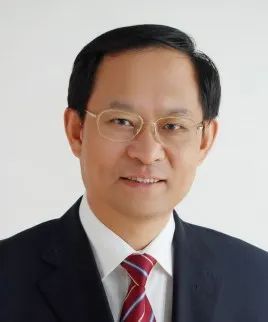
Wang Jingwu, male, Han nationality, party member, born in April 1966, Guangzong County, Hebei Province, doctor of economics, researcher.
In 1985, he joined the work, and served as Party Secretary and President of Shijiazhuang Central Branch of China People’s Bank, Director of Hebei Branch of State Administration of Foreign Exchange, Party Secretary and President of Hohhot Central Branch, Director of Inner Mongolia Branch of State Administration of Foreign Exchange, Party Secretary and President of Guangzhou Branch, and Director of Guangdong Branch of State Administration of Foreign Exchange.
He used to be a representative of the 11th People’s Congress of Hebei Province, a member of the Financial and Economic Committee of the 11th People’s Congress of Hebei Province, a vice-chairman of the 9th and 10th committees of Hebei Youth Federation, a member of the 9th Committee of Inner Mongolia Autonomous Region, and a vice-chairman of the 11th Committee of Inner Mongolia Youth Federation.
In 2015, he was hired as an expert member of the decision-making advisory Committee of the Guangdong Provincial Government (2015-2018).
Since December 2018, he has served as the director of the Financial Stability Bureau of the People’s Bank of China.
Source of this article: The president should participate in the comprehensive compilation from Sina Finance Research Institute, Caixin, Cailian, etc.
This article was first published on WeChat WeChat official account: The President should attend. The content of the article belongs to the author’s personal opinion and does not represent Hexun.com’s position. Investors should operate accordingly, at their own risk.