A battle for talents is quietly rising around the world. The latest to join this battle is Japan.
Japan’s entry and exit countries issued an announcement in the residence management office, and from April 21, the newly added "special high-level talent system" for foreigners was officially implemented. According to Japanese media reports, the most attractive thing about this system is that as long as certain conditions are met, it only takes one year to obtain the permanent residence qualification in Japan.
According to the latest statistics released by the Ministry of Internal Affairs and Communications of Japan on April 12, as of October 1, 2022, excluding foreigners living in Japan, the total population of Japan was 122 million, a decrease of 750,000 from the previous year, the biggest decline since 1950. From the age point of view, the labor force population aged 15 to 64 is 74.208 million, accounting for 59.4%, which is the same as the historical lowest level set in the previous year.
Former Japanese congressman Koike Masayoshi told CBN that the shortage of labor force is very serious in various industries in Japan; In the global competition for senior talents, Japan also lags behind other countries.
In the "Talent Introduction Index" of OECD)2023, Japan ranked 22nd; In IMD’s "World Talent Ranking 2022", Japan ranks only 41st, lower than Europe, America, South Korea and China.
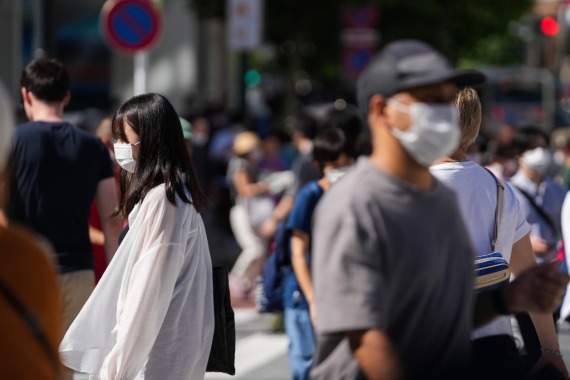
In 2022, Japan’s trade deficit reached $160 billion, the highest since 1979 with comparable data. At the same time, the accelerated population shrinkage is accompanied by the "talent deficit".
"Although the epidemic has restricted the movement of people, even if there is no epidemic, the situation of high-income people who are tied down by taxes and social security and senior talents who want to get higher wages will increase overseas." Koike said, "Now in Japan, excellent IT engineers and technicians, even sushi craftsmen, have been poached by countries that offer better treatment overseas."
Koike believes that it is the internal and external crises such as the shortage of manpower in Japan, the intensification of international talent competition, and the brain drain from overseas that have contributed to the Japanese government’s final decision to join the global "grab people" war.
Japan’s new talent policy and international benchmarking
Previously, the conditions for obtaining a "high-level talent visa" in Japan were quite complicated. For example, the system scores the applicants’ academic qualifications, work experience, annual income and other items. If the scores exceed a certain level, they will be granted the qualification of "Highly Specialized Post No.1" after staying for five years, and after three years, they can be converted into a highly talented person No.2 visa for indefinite residence (different from a permanent residence visa).
This time, in order to speed up the attraction of talents, the Japanese government has released two big moves: the first move is to introduce a visa for "particularly highly specialized posts" for foreign business operators and foreign technical or research talents, so that qualified applicants can bypass the original complicated points system and get permanent residence in Japan directly after going to Japan for one year; The second measure is to target young people who graduated from the top 100 universities in the world and issue them visas that can stay for two years to facilitate job hunting.
Specifically, for foreign business operators, to apply for a "special highly specialized post" visa, they need to have more than 5 years of management experience, with an annual income of more than 40 million yen (about 170,000 yuan per month); As far as foreign technical or research talents are concerned, they need more than 10 years of working experience or master’s degree before being hired by Japanese companies, and their annual income after employment reaches more than 20 million yen (about 1.02 million yuan).
An intermediary told CBN that, as far as the talents applying for "particularly highly specialized positions" are concerned, "in fact, they simply simplify the soft requirements in the integral table and directly use ‘ Salary ’ Win or lose. However, the threshold of annual income of 20 million to 40 million yen is not low. Japanese companies pay attention to the annual merit sequence, and the annual income of the top leaders of general enterprises is also around 20 million yen. "
As for the new policy for international students, the Japanese government’s new regulations show that students who graduated from the top 100 universities in the world and graduated within five years will be issued a "specific activity visa", allowing them to stay in Japan for up to two years to find a job in order to attract them to stay in Japan eventually.
The above-mentioned intermediary believes that this adjustment measure is in line with international standards. In Europe, at least 10 countries have previously introduced work visas for graduates to study abroad. For example, there is a two-year PSW visa in the UK, and international students can stay in the UK for job hunting or business activities within two years after graduation. In the Netherlands, there is also a "job search plan within one year", which aims to provide a one-year residence permit for non-EU graduates who graduated from the Netherlands. Holders can work at will without applying for another work permit.
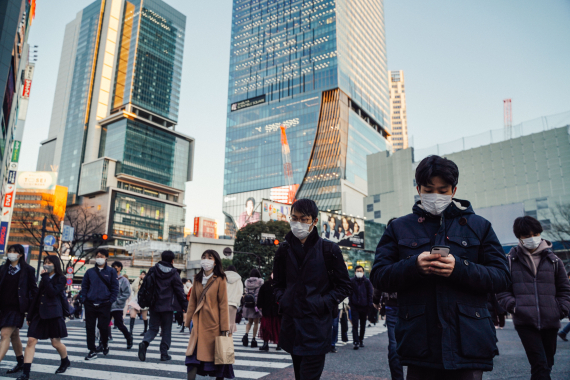
Looking around the world, after the epidemic, with the gradual recovery of international mobility, countries are thirsty for talents and regard talents as the driving force for economic recovery.
As one of the international financial centers and wealth management centers, Singapore doubled the investment threshold for family office projects to S $10 million in April last year. At the end of August last year, the Ministry of Manpower of Singapore announced the launch of the "Top Specialist Permit" and began accepting applications this year. Canada, which also relies heavily on immigration, also announced the Immigration Level Plan for 2023-2025. The plan shows that in the next three years, Canada’s immigration target quota will reach a record high, totaling 1.45 million, with emphasis on introducing economic immigrants.
In Britain, although investment immigration has become a thing of the past, in late May, 2022, the UK announced the launch of the High Potential Talents Visa Program (HPI), which provides the top 50 college graduates in the world with work visas for two to three years, and can also bring their spouses and unmarried children under the age of 18 to live and live in the UK. According to the US Immigration Bureau’s estimation, the US green card for professional immigrants in fiscal year 2023 will take over the remaining 60,000 quotas in the previous fiscal year, with a total immigration quota of 200,000.
How to improve the labor shortage in Japan?
Over the years, under the background of declining birthrate, how to alleviate the labor shortage has become a difficult problem for successive Japanese governments. In 2018, the Japanese Senate and House of Representatives formally passed amendments such as the Entry-Exit Administration and Refugee Recognition Law on relaxing the labor visa for foreign workers, which was regarded as an important step to alleviate the labor shortage. The bill was officially implemented on April 1 of the following year. At that time, the Japanese government planned to introduce 345,100 foreign workers in 14 industries within five years to solve the problem of labor shortage.
For more than four years, despite the epidemic, the data released by the Japanese Ministry of Health, Labor and Welfare as of the end of October 2022 showed that the number of foreign workers working in Japan was about 1,822,700, an increase of 95,000 over the previous year.
Koike told CBN that although the working-age population has decreased, the labor shortage has slightly improved after the employment rate of women and the elderly has increased, but the male labor force with high employment rate has continued to decrease. "In occupations dominated by men’s full-time jobs, the shortage of labor has not improved because women and the elderly can’t make up for it. For example, in the fields of construction, medical welfare, etc., shortage of manpower has become a serious problem. " He said, "In addition, with the lifting of the epidemic restrictions, Japan’s domestic economic activities and personnel flow have gradually returned to normal, and there are also shortages of manpower in tourism, catering, logistics, wholesale, retail and education."
Koike believes that in addITion to efforts to improve the employment rate of women and the elderly in Japan, it is also necessary to improve productivity by improving working methods and the use of IT technology, entrusting overseas enterprises and talents, and accepting more foreign talents.
"Especially about introducing talents from abroad, there are many discussions in Japan." He said, "But for foreigners, Japanese society has a natural language barrier. In the workplace environment, Japan’s unique personnel and salary system, such as annual merit sequence and salary standard, are different from global standards. "
Therefore, Koike believes that in addition to recruiting overseas talents, it is necessary to promote the workplace environment in which English is used, introduce wages commensurate with the work content, and set high remuneration for outstanding talents even if they are young, such as clarifying the standards for promotion and salary increase to improve the transparency of treatment, promote the growth desire of workers, and promote the stability of talents. In addition, inefficient long-term labor must be corrected.
"More importantly, we must also keep up with the supporting support for foreign talented families, such as language teaching for foreign children and the integration of spouses into Japanese society." Koike said. According to a recent survey conducted by the Ministry of Education, Culture, Sports, Science and Technology, as of May 1, 2022, there are still 8,183 school-age foreign students in Japan who are not studying in primary and secondary schools in Japan because of language and living habits. Koike believes that after the promulgation of the New Deal, Japan’s central government, local governments and enterprises should work together to create a good environment suitable for retaining talents.