Wen Rumin
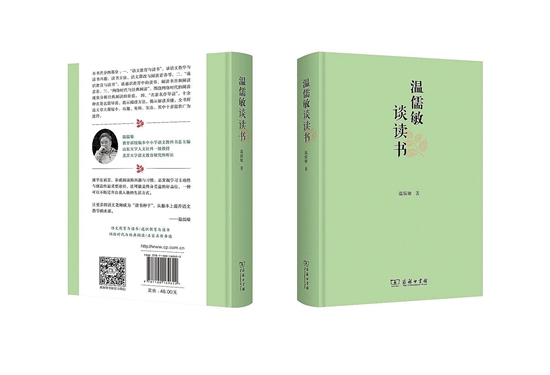


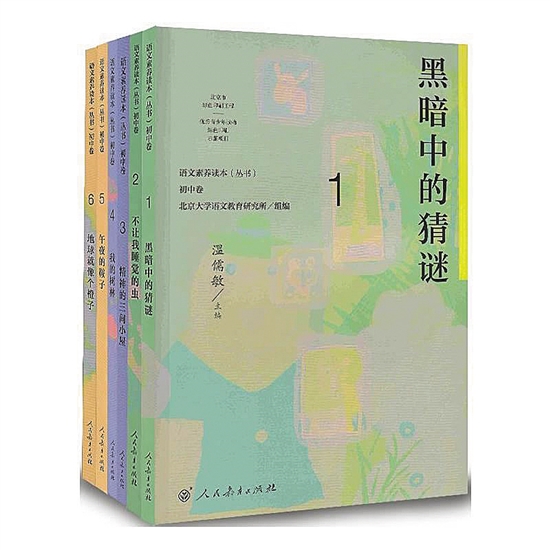
The summer vacation is over half, and reading is still on the way. Both students and parents will have more or less doubts and even anxiety about reading. Recently, the Commercial Press published Wen Rumin, a professor of Chinese Department in Peking University and editor-in-chief of Chinese textbooks for primary and secondary schools, which systematically expounded his views on reading and Chinese learning. Recently, Wen Rumin accepted an exclusive interview with Yangcheng Evening News.
Examinations and reading
"Never read" the materials of the college entrance examination questions does not mean "never studied"
Yangcheng Evening News: The "Ministry Edition" Chinese textbooks have improved the requirements for reading depth, breadth and speed. Correspondingly, what will happen to the senior high school entrance examination and college entrance examination?
Wen Rumin: Some media reported that the "part-edited" Chinese textbooks are "specialized" and do not read, which means that this set of textbooks has returned to "reading-oriented", paying attention to expanding reading areas and learning different types of reading methods. However, in any case, the capacity of textbooks is limited, and there are not many reading articles collected. It is important to draw inferences from others, so that students can expand from textbooks and classroom teaching, and expand their reading surface and reading volume. This is also the requirement of college entrance examination and senior high school entrance examination. I don’t take part in the proposition, but I am concerned about this aspect.
Judging from the reading questions of Chinese in recent years, many propositional materials are not from textbooks, covering a wide range, and even selected from some papers with strong professionalism, including politics, economy, science and technology, history, philosophy, etc., giving people the impression that — — What I have learned has not been tested, and what I have tested has not been studied. In fact, "never read" does not mean "never learned", but the test is the transfer of reading ability and the application of methods. The emphasis is on ability, thinking, comprehensive analysis, retrieval and aesthetics, and so on.
Candidates who usually read a wide range of books and are active in thinking are like a duck to water in the face of this exam change, and it is easy to get good grades; However, candidates who have a narrow reading range, read only textbooks and only pay attention to "brushing questions" may not adapt and it is difficult to achieve good results. Even if the latter go to college, their weakness of "reading less" will appear, which will restrict their academic development.
The college entrance examination proposition began to explore how to test "whole book reading"
Yangcheng Evening News: Why should we encourage "reading the whole book" in the "part-edited version" of Chinese textbooks? Some people complain that if the language requires more reading, especially the whole book, it will increase the academic burden. What do you think?
Wen Rumin: The "part-edited version" language pays special attention to reading and the original works. In primary schools, there is a "happy reading bar" to guide students to read whole books such as fairy tales, stories and novels. Junior high school has set up a "guide to famous books", which requires reading 12 famous books in three years, and also provides a bibliography of 24 famous books that you choose to read independently. Chinese in senior high school is coming soon. Some students have extended reading after class, or they are required to find books to read by themselves under the driving of study tasks. There is also a special unit of "reading the whole book".
Why do you attach so much importance to "reading the whole book"? First, let students contact some original classics relatively completely, so as to "lay the foundation" for the development of life; Second, aiming at the tendency of "fragmented" reading and "shallow reading" brought by online reading, students can return to complete and sound reading and cultivate good reading habits; The third is to "study and nourish the nature", and to "sharpen the temper" by "reading the whole book", cultivate perseverance, cultivate the mind and get rid of impetuousness.
The addition of "reading the whole book" has somewhat changed the traditional situation that Chinese textbooks only pay attention to single teaching, which will inevitably have an impact on future teaching and examinations.
In recent years, the paper propositions of Chinese college entrance examination and senior high school entrance examination began to explore how to test the situation of "reading the whole book" For example, there are some key details in the exam of A Dream of Red Mansions. If you haven’t read the novel completely and only watched TV, it will be difficult to answer. I think this improvement is conducive to promoting the "reading-based" Chinese teaching and returning to the "essence" of Chinese learning.
Some students and parents complain that the increase in reading new textbooks will increase the academic burden. In fact, the amount of reading required by the textbook has been measured. If students have the desire and interest to read, the amount of reading arranged now does not constitute any burden at all. If you don’t want to study, even if the reading volume is as low as the previous textbooks, you can’t finish it. A lot of time is spent repeatedly "doing problems", and the burden is heavy and the effect is not good.
Yangcheng Evening News: From the perspective of teaching and examination, are there any quantitative standards or regulations for the reading level of primary schools, junior high schools and senior high schools?
Wen Rumin: Chinese is a comprehensive subject, and it is difficult to quantify the teaching effect. However, the basic requirements or minimum standards should still exist, and the Chinese curriculum standards have corresponding provisions. For example, the first and second grades of primary school require reciting 50 excellent poems (paragraphs), and the total amount of extracurricular reading is not less than 50,000 words. Form the habit of reading books and newspapers in the third and fourth grades, and the total amount of extracurricular reading is not less than 400 thousand words. The fifth and sixth grades should be able to browse and read silently at a certain speed. The general reading materials should be no less than 300 words per minute, and the total amount of extracurricular reading should be no less than 1 million words.
Junior high school students learn to read poems, narrative and explanatory articles, read simple discontinuous texts, and can skillfully use skimming and browsing methods to expand the reading range. Get into the habit of reading silently, and read general modern texts with no less than 500 words per minute. Recite 80 ancient poems (paragraphs), and the total amount of extracurricular reading is not less than 2.6 million words.
The new Chinese curriculum standard for senior high school requires reading speculative, practical, literary and other texts, reading more than five literary classics and other reading materials by yourself after class, with a total amount of not less than 1.5 million words. In addition, it is suggested to recite 72 ancient poems (including compulsory and optional compulsory). The high school Chinese curriculum standard also divides the academic quality level into five grades, and describes the performance of learning results at different grades, which can be used for reference.
Promoting quality education under the background of "exam-oriented education has existed for a long time"
Yangcheng Evening News: You advocate that teachers and students should take the boat of exam-oriented education and do something about quality education. How to do less exercises and read more books? How to balance examination and quality education?
Wen Rumin: We must vigorously promote quality education. This is the direction, no doubt. However, the pressure of exam-oriented education is huge, which can not be eliminated in a short period of time, and it is also a grim reality. As long as the social competition is fierce, as long as there are selective examinations, exam-oriented education will exist.
We are discussing how to promote quality education under the background of "exam-oriented education has existed for a long time", which is a very difficult undertaking and requires preparation for long-term struggle.
For many teachers, students and parents, the senior high school entrance examination and college entrance examination are very realistic. They don’t deny the importance of quality education, but they will still put the exam first. This is human nature and understandable. To promote quality education, we should not be divorced from this reality, and we should not completely oppose quality education and exam-oriented education. They are opposed, but they are not either one or the other. Exam-taking ability is also a kind of ability, not all of which can be cultivated by "brushing questions". What we oppose is only those rigid negative educational models that stifle individuality and inhibit creative thinking. It is better to admit that exam-oriented education is "reasonable" at present, and then try to reduce the negative impact of exam-oriented education and gradually expand the space for quality education, which can be changed a little.
The so-called "boarding the boat of exam-oriented education and doing something about quality education" means trying to strike a balance between the two. For example, improving the examination, paying more attention to the examination ability, comprehensive quality and creative thinking may "incite" the reform of curriculum and teaching and reduce the negative impact of examination-oriented education. I have said many times that qualified teachers can make students do well in exams without killing their brains and interests, and they will try their best to strike a balance between exam-taking and quality education.
"Part-edited" Chinese textbooks are trying to change the practice of simply instilling classroom knowledge and repeatedly "brushing questions", advocating Chinese teaching to give full play to students’ subjectivity in learning, doing less questions and reading more books, hoping to promote the reform of college entrance examination and senior high school entrance examination, make students do well in the exam, and focus on students’ long-term development. This is a balance.
Yangcheng Evening News: Some children’s reading has their own preferences and personalized characteristics, and they don’t necessarily like the bibliographies specified and recommended in Chinese books. Should such children respect their preferences and be able to cope with the college entrance examination?
Wen Rumin: A key word of Chinese curriculum reform is "giving full play to the subjectivity of students’ learning", and the "part-edited" Chinese textbooks also try to strengthen the subjectivity of students’ learning. Therefore, students’ personal preferences and personalized characteristics of reading should be fully respected.
For example, since the senior grade of primary school, students don’t like the list of books opened by teachers very much, and they prefer to choose their own books to read. This is normal. The textbook specifies a small number of required books, and most other bibliographies are optional and not mandatory. Sometimes we don’t have to specify the "required reading" list, but suggest reading a certain range of books, so that students can choose from them, which may be better. There should not be too many "prescribed actions" in the reading process, and it is not appropriate to assign a lot of homework. Don’t always ask for "writing", such as writing the feelings after reading. These tasks are too many and tiring to read, which is not conducive to encouraging more reading. If a student has more free reading, his Chinese literacy will also be improved, and the exam will not be much worse.
Yangcheng Evening News: Parents or teachers who let their children read freely are taking risks under exam-oriented education — — Children are also very uneasy about reducing the time for doing problems and other homework to read books. How to grasp this free space and how to balance it with exams?
Wen Rumin: There is a question of how to balance current interests and long-term considerations. Give students a certain degree of reading freedom, and students will read more extracurricular books, which will somewhat squeeze the time for "doing problems". The question is, is it the "right way" to learn by repeatedly "doing problems"? According to the analysis of the candidates who have achieved excellent results in Chinese in the college entrance examination in recent years, it is found that they can get good results without "brushing the questions", and most of the students who get high marks have a wide reading range and active thinking. You will soon see that in order to reduce "brushing questions", the new senior high school Chinese no longer sets up after-school exercises, but replaces them with "reading tips" and "unit learning tasks". Therefore, extracurricular reading and free reading will not "hinder" the college entrance examination and the senior high school entrance examination, but may help the examination.
I advocate that students should read "casual books". The so-called "idle books" are those books that children choose by themselves and are not necessarily tied to the test objectives. Only when you are allowed to read "casual books" and have the "freedom" of reading can you have interest in reading. College entrance examination and senior high school entrance examination are both important events for students, and it is also appropriate to "study for the exam", but keeping a little space for free reading properly can make your hobbies and potential develop better.
Chinese teaching materials and reading
Children don’t study, which may be due to the lack of reading atmosphere in the family.
Yangcheng Evening News: What worries many parents is how to cultivate their children’s interest in reading.
Wen Rumin: There may be many reasons why children don’t have the habit and hobby of reading. The most important reason is that the family lacks the atmosphere of reading. Unless children have a special gift and can eliminate interference, it is difficult for most children to develop the interest and habit of reading in an environment of "no reading". Parents don’t read books themselves, but watch WeChat, play cards and play games all day. How can they make their children fall in love with reading? Parents of primary school students and junior high school students, in particular, must set an example and study with their children as much as possible, at least not to affect their study. Elementary school and junior high school are the best time to develop interest in reading, which is very crucial. If you don’t develop the habit and interest in reading at this stage, it will be very difficult to "catch up" later.
Not all books are worth intensive reading. Learn to read and browse quickly.
Yangcheng Evening News: You said that primary and secondary school students should learn to read "rolling and crawling" and master reading methods such as intensive reading, browsing, guessing reading, skipping reading and group reading. However, Chinese classes emphasize texts and seldom teach reading methods. How can children learn these reading methods?
Wen Rumin: It is true that the situation of "emphasizing texts and seldom teaching reading methods" is widespread in Chinese class. However, the current curriculum reform focuses on students’ dominant position, protects students’ curiosity, imagination and thirst for knowledge, stimulates their interest in learning, and carries out various forms of reading activities to improve teaching effect.
The newly promulgated Chinese curriculum standard for senior high schools makes it clear that Chinese teaching should solve "Chinese core literacy". Recently, the Central Committee and the State Council issued a document on deepening education and teaching reform and improving the quality of compulsory education in an all-round way. It also includes stimulating students’ interest in reading, learning to read, and taking reading as a habit and lifestyle. I think those who only pay attention to the text and seldom teach reading methods will be improved. Parents should also learn to follow up and create a good environment for their children to study.
I advocate that students should study "continuously", which means that they can learn to read quickly and browse, and they can read without understanding, and their interest is cultivated, and their reading volume is increased, so that their Chinese literacy can be improved. Not all books are worth intensive reading.
Network Reading: Learning the Ability of Media Selection and Filtering
Yangcheng Evening News: How do you view the influence of online reading and fragmented reading on teenagers? What measures does Chinese education have to deal with this?
Wen Rumin: This is indeed a problem. The appearance of the Internet has brought a lot of convenience and promoted the prosperity of society, but it has also caused some troubles. It seems that it is too late for human beings to deal with it in changing their thinking habits and social behavior.
The fragmentation, entertainment and superficiality of reading have obvious negative effects on the mental growth of teenagers. There are many students who can’t live without their mobile phones for a moment, and they lack concentration more and more. I’m afraid it’s hard to keep their attention for more than ten minutes. Their thinking is jumping and collage, and their writing articles or language expressions lack coherence and logic. They are either one or the other, black or white, and they often argue fiercely, but they can’t "focus" … … These manifestations are all related to the fragmentation of online reading.
As for entertainment, superficiality, blasphemy against classics, contempt for authority, indulging in jokes and jokes, it makes the mind flat and vulgar. This situation has aroused the concern of some people in the education field. Some elite schools have begun to try to restrict students’ use of mobile phones and their exposure to vulgar and popular programs, which is also a last resort.
"Cultural fast food" can be contacted, but don’t let "reading taste" be damaged.
Yangcheng Evening News: There is a gap between teenagers and classic books. What should I do if I don’t like them?
Wen Rumin: It’s not surprising that students don’t like reading classics. It’s a common and natural phenomenon. Because they have a historical distance from the classics, language and form may be separated, and of course there are age factors. Life experience and understanding limit the understanding of the classics. In addition, young people are curious and rebellious. The more schools and teachers ask them to "share" the classics they want to read, the less they may like them, and instead favor those "spoof" and "nonsense" works.
How to close the distance between students and classics, so that they can approach classics in a more vivid and friendly way (including the Internet, film and television, etc.) is a topic that educators, including responsible media and cultural businesses, should consider. It is very necessary to explain and spread the classic works in simple terms, but this should not be at the expense of distorting or ridiculing and disassembling the classics.
The habit of reading needs to be cultivated, and reading classics needs to be calm and tempered. It is a long process of self-cultivation. Classics are difficult for young people to read because of the isolation of the times. To constantly overcome some reading obstacles, their rich connotations need to be carefully and repeatedly explored, which will not be as enjoyable as reading popular novels. We must first be mentally prepared to "eat books" and overcome that kind of superficial trouble before we can really enter a good reading state. This is also a kind of study habit and perseverance.
When selecting all kinds of texts, "Bu Bian Ben" Chinese not only touches the classics, but also fully considers the cultivation of students’ reading habits and the mastery of methods. For different types of books or classics, there are also hints on how to read and what to focus on. Teachers and parents also have the responsibility to make students understand that it is understandable to read some fun and relaxing things online, but we should pay attention to the fact that a lot of information published from the media is mixed with a lot of "cultural garbage". If you come into contact with these "rubbish" frequently, you will be easily influenced by value digestion, relativism and even dance academy’s thoughts, and your reading taste will be ruined, which is really in danger of "lifelong damage".
All kinds of popular and best-selling "cultural fast food" can be contacted, but it can’t replace the reading of the original book. If you want to know the taste of pears, you must taste them yourself and read the classics. What you need is the process of understanding, thinking and self-cultivation, which is the "cultivation", that is, the necessary way of spiritual growth.
(Text/Yangcheng Evening News reporter Jiang Wei)